T hird spaces,’ a term coined by sociologist Ray Oldenburg, are the social spaces that exist outside of the home (our first place) and the workplace (our second).1 For decades, restaurants, bars, cafés, and diners have helped shape community life—creating space for casual interaction, connection, and the kind of unstructured time where relationships take root.2
For example:
A neighborhood coffee shop in the mid-afternoon. A few regulars stop in after work or between errands. One person opens a laptop, another reads, two others sit and talk over iced coffees. The barista knows a few names, asks about someone’s day, and a brief conversation starts between customers who recognize each other from previous visits. No one planned to meet, but they stay longer than intended.
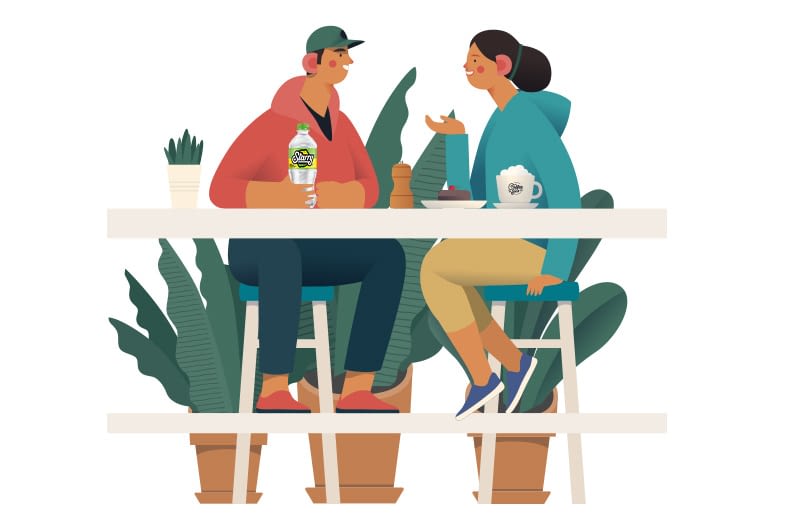
Third places were built to support these low-pressure, unstructured interactions that happen because people share a space, not because they schedule it.
A loneliness epidemic
Today, the third space infrastructure is under strain. The pandemic accelerated a shift toward solitary, digital lifestyles, and remote work reduced the “in-between” encounters that once happened between home and office.2
Rising costs have also contributed. Routine dining has begun to feel like a splurge rather than a habit.
- 33% of consumers are more likely to celebrate special occasions at home2
- 26% are visiting casual restaurants less often2
- 29% are dining out less with groups of friends and family2
And the people have spoken… they are missing other people. About half of American adults report feeling lonely3, and 70% of consumers aged 15 to 24 report having less social interaction with friends than they did two decades ago.3 Public leisure is critical for societal well-being, and when we stop curating places to gather, people become strangers and anxiety heightens.
The comeback of connection
Operators are beginning to recognize that the pendulum may have swung too far toward off-premises formats. In fact, brands like Starbucks, whose stores popularized the third-place concept for a generation, now generates more than 70% of its sales through its mobile app and drive-thru.3
Convenience alone can’t replace connection, and the industry is reacting accordingly:
- Under CEO Brian Niccol, Starbucks has publicly committed to reclaiming the third place, bringing back ceramic mugs for dine-in guests and redesigning café spaces that encourage a longer stay.1,3
- CAVA launched its “Project Soul” initiative to soften dining rooms with new seating and a calmer color palette, and CEO Brett Schulman publicly rejected the narrative that dining rooms are dying.1,3
- Panera’s “It Just Feels Good” campaign repositions the chain as a sit-down destination for everyday occasions.3
- Corner Bakery has reinvested more than $6 million into refreshed interiors, patios, and beverage counters across key markets.3
- Black Rock Coffee Bar designs its lobbies explicitly as gathering places, with lighting, furniture, music, and barista engagement that combine to make people want to stay.3
- Even Subway has redesigned around a dine-in format with its Fresh Forward 2.0 prototype after tests showing significant lifts in likelihood to dine in and return.3
With 60% of QSR operators prioritizing on-premises dining,3 the industry is beginning to rebalance—acknowledging that physical spaces play a critical role in how people connect.
The beverage advantage
As food and beverage operations rebuild their role as third places, beverages stand out as one of the most effective tools available.
Beverages lower the threshold for gathering
In a value-conscious environment, a drink offers a low-commitment way to connect. A full meal can feel like a decision; a beverage feels easy. That difference matters when building repeat, habitual visits
They work throughout the entire day
From a morning coffee with a colleague to a late-evening cocktail or mocktail with a friend, beverages create opportunities for connection at every hour—without requiring a full dining occasion.
This versatility is what allowed coffeehouses to become the defining third place of the past two decades, and it’s what positions today’s café, quick-service, and casual concepts to reclaim that role.
They adapt to the moment
A to-go drink can spark a quick interaction, giving people a simple reason to walk, talk, and connect—while a dine-in beverage can extend one. Few consumer options flex as easily between convenience and linger time. Products like Starbucks® Frappuccino®, Pure Leaf®, Gatorade®, and Mountain Dew® naturally support both grab-and-go moments and longer, more social visits.
Beverages carry the rituals
Coffee breaks, happy hours, brunches, and toasts are beverage-anchored rituals. It’s rituals that make gathering feel meaningful rather than incidental. Beverages give structure to these moments, making them easier to repeat and build into routine.
Reviving the third place isn’t a single initiative. It shows up in how a space feels, how service flows, and how the drink supports the experience. Beverages play a central role in that equation, and operators shouldn’t treat them like an afterthought. PepsiCo Partners can help bring these moments to life.
The third space secret? PepsiCo
At PepsiCo Partners, we see beverages not just as beverages, but as tools for building connection. Morning coffee runs, afternoon bubly™ breaks, happy hour cocktails mixed with favorites like Rockstar® Energy or poppi®—these are the occasions that bring people together. With a portfolio built for every daypart, plus proven recipes, merchandising support, and operator resources, we help operators create beverage experiences that invite people to stay a little longer, return a little sooner, and bring someone with them next time.
Sources
1 New York Times, Where Have All the ‘Third Places’ Gone?, February 2025
2 Datassential Top 500 Report (June 2025)
3 Nation’s Restaurant News, Restaurants embrace the return of the third place, May 2025
